
Finding qualified talent has never been more complex. With over 50,000 job sites competing for attention, yet only a handful delivering consistent results, knowing where to post your openings can make or break your hiring strategy. Data shows that 70% of job seekers start their search on Google, but which boards actually deliver?
This comprehensive guide breaks down the 15+ best job boards, from high-volume generalist sites to specialized tech and industry platforms. You’ll discover exactly where to find your ideal candidates, how much each platform costs, and most importantly, how to post to all of them in minutes instead of hours.
Whether you’re hiring for tech roles, healthcare positions, or anything in between, this guide will show you how to build a multi-board strategy that cuts your time-to-hire while reducing costs. Plus, we’ll reveal how modern applicant tracking system (ATS) integration lets you manage everything from a single dashboard.
Top General Job Boards for Maximum Reach
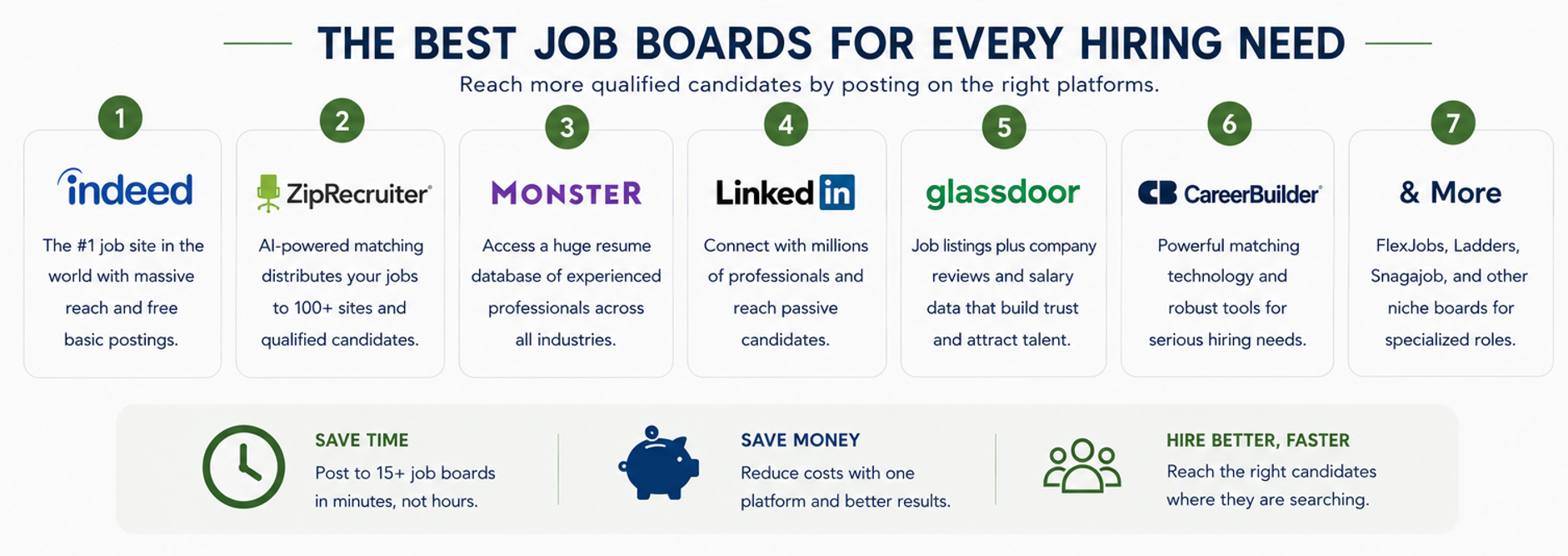
General job boards remain the backbone of most recruitment strategies, delivering volume and diversity that specialized platforms can’t match. Here’s what you need to know about each major player.
Indeed
Indeed dominates the job board landscape, with 350+ million monthly visitors and reaching the vast majority of U.S. online job seekers. This massive reach translates to unmatched visibility for your postings, especially when combined with Google for Jobs integration.
The platform operates on a freemium model: you can post basic listings at no cost, then boost visibility through pay-per-click sponsorship. Indeed’s robust filters and searchable resume database make it ideal for volume hiring, while features like salary comparisons and company reviews enhance employer branding. For maximum impact, optimize your job titles for Indeed’s search algorithm and refresh listings every 14 days to stay atop search results.
LinkedIn Jobs
LinkedIn’s professional network of 1 billion members globally doubles as a powerful recruiting platform, particularly for business-to-business (B2B) and professional roles. With 52 million weekly job searches and 77% of recruiters using it daily, LinkedIn excels at reaching passive candidates through professional networks.
While you can post one free job on your company page, a broader reach requires paid posts or recruitment ads. The platform’s strength lies in detailed candidate insights, referral networks, and artificial intelligence (AI) powered candidate recommendations. LinkedIn Jobs works best for roles that require specific professional experience or for targeting candidates who aren’t actively job searching.
ZipRecruiter
ZipRecruiter serves 25 million monthly active users with approximately 9 million active job listings. Its standout feature is powerful AI matching that distributes your posting to over 100 partner sites while sending targeted email alerts to qualified candidates.
The subscription-based pricing model (per-job or per-seat) includes their famous “one-click apply” feature, making it incredibly easy for mobile candidates to submit applications. Many employers report finding qualified candidates within 24 hours thanks to ZipRecruiter’s aggressive matching algorithms and candidate outreach.
Monster
As one of the original job boards, Monster maintains a massive resume database spanning all industries. While its market share has declined from its peak years, Monster still delivers access to experienced professionals and integrates seamlessly with most ATS platforms.
Monster operates on a paid posting model with various package options. Key features include resume database access, employer branding products, and sophisticated resume alerts. The platform particularly excels at reaching seasoned professionals with 5+ years of workforce experience.
CareerBuilder
CareerBuilder covers a significant portion of the U.S. workforce, with 150+ million candidate profiles, and receives approximately 175 million visits annually. This established platform maintains a strong search engine optimization (SEO) presence and is trusted by many major staffing agencies.
Paid posting packages include advanced targeting by skill and keyword, integrated assessments, and employer branding options. CareerBuilder’s strength lies in its comprehensive candidate data and sophisticated matching technology, making it ideal for specialized or hard-to-fill positions.
Glassdoor
Now part of Indeed’s network, Glassdoor uniquely combines job listings with company reviews and salary insights. With 69% of candidates checking employer reviews before applying, Glassdoor has become essential for employer branding.
Job postings on Glassdoor typically go through Indeed’s sponsorship system. The platform’s transparency features, including employee reviews, salary data, and interview experiences, can significantly impact application rates. Companies with strong employer brands receive substantially more applications on Glassdoor than those with poor ratings.
FlexJobs & Other Broad Niches
FlexJobs specializes in vetted remote, part-time, and flexible positions, using a paid subscription model that screens out scams. Job seekers pay to access listings, which means only serious candidates apply.
Other noteworthy boards include Ladders for executive roles ($100K+), Snagajob for hourly service positions (15 million+ hourly workers), and even Craigslist for local, cost-effective postings in trades or retail. Each serves specific hiring needs: choose based on your role requirements and budget constraints.
Best Tech & IT Job Boards
Tech hiring requires specialized platforms that speak the language of developers and information technology (IT) professionals. These boards cut through the noise to deliver qualified technical talent.
Dice
Dice leads the tech-only job board space with 9 million+ tech resumes and minimal non-technical clutter. This laser focus on IT roles means higher-quality applicants and less time screening unqualified candidates.
The platform’s deep skill tagging system and comprehensive salary data help both recruiters and candidates make informed decisions. Dice’s algorithm understands technical nuances, distinguishing between Java and JavaScript, for instance, ensuring better matches than general boards.
GitHub Jobs & Hired
GitHub’s 50 million-strong developer community represents one of the largest concentrations of technical talent globally. While GitHub retired its dedicated jobs platform in 2022, recruiters still leverage the community through sponsored content and direct outreach.
Hired operates as a reverse marketplace where pre-vetted engineers create profiles and companies apply to them. This model flips traditional recruiting, letting you see salary expectations and availability upfront. Both platforms excel at reaching senior developers who might ignore traditional job postings.
AngelList / Wellfound
AngelList (now Wellfound) dominates startup recruiting, with thousands of startups posting roles that emphasize equity compensation. The platform’s transparency around funding, company size, and equity packages attracts candidates specifically interested in startup culture.
Free basic posts reach entrepreneurial-minded talent, while the premium “A-List” option provides enhanced visibility. The platform’s startup focus means candidates expect discussions about equity, company vision, and growth potential, perfect for early-stage companies competing against established firms.
Remote-Focused Tech Boards
Remote tech job boards have become increasingly important as distributed teams become the norm. We Work Remotely, Remote OK, and RemoteTechJobs aggregate remote-only positions, reaching global talent pools unrestricted by geography.
These platforms attract candidates specifically seeking remote work, meaning higher engagement rates and better culture fit for distributed teams. Pricing varies from free posts to premium placements, but the quality of remote-first candidates typically justifies the investment.
Built In & StackOverflow’s Legacy
Built In operates city-specific tech hubs (Built In NYC, Chicago, Austin, etc.) that combine job listings with tech news and employer branding content. This localized approach reaches candidates interested in specific tech ecosystems.
While Stack Overflow Careers shut down in 2022, its legacy lives on: the platform once attracted 100 million developer visits per month. Today, smart recruiters still engage the StackOverflow community through content and strategic participation, building relationships with top technical talent.
Industry-Specific Job Boards That Deliver Quality Over Quantity

Specialized boards dramatically improve candidate quality by targeting professionals within specific industries. Here’s where to find focused talent pools.
Healthcare
Healthcare recruiting demands specialized platforms that understand credentialing and compliance. Doximity, the physicians’ network, counts 75% of U.S. doctors as members, offering unparalleled access to medical professionals. Health eCareers lists thousands of medical positions from numerous employers.
These platforms feature Health Insurance Portability and Accountability Act (HIPAA)- compliant workflows and understand healthcare-specific requirements, such as board certifications and state licenses. The focused audience means less time verifying credentials and more time evaluating fit.
Creative & Design
Creative roles require visual portfolios, making specialized platforms essential. Dribbble and Behance (10 million+ portfolios) let you preview work before reaching out. These platforms transform recruiting from resume reviews to portfolio evaluations.
Mashable Jobs leverages 45 million monthly visitors interested in digital media and creative tech. The visual nature of these platforms means you can quickly assess technical skills and aesthetic fit, streamlining the creative hiring process.
Finance & Fintech
Financial services recruiting happens on specialized platforms, with a focus on compliance and credentialing. eFinancialCareers and OneWire focus exclusively on banking, investment, and fintech roles, attracting candidates with relevant licenses and clearances.
These boards feature sophisticated filters for certifications (Chartered Financial Analyst (CFA) and Series 7) and security clearances, which are critical for compliance-heavy positions. The concentrated talent pool means higher-quality applications and faster screening.
Nonprofit, Government & Education
Mission-driven organizations need platforms that attract values-aligned candidates. Idealist serves the nonprofit sector by connecting candidates who prioritize purpose over pay. USAJOBS handles federal positions with built-in compliance for government hiring requirements.
HigherEdJobs specializes in academic positions and understands the unique timelines and requirements of educational institutions. These platforms attract candidates specifically seeking mission-driven work, improving retention rates.
Hourly, Retail & Hospitality
High-volume hourly hiring requires mobile-optimized platforms with quick application processes. Snagajob’s 15 million hourly workers primarily use mobile devices, making one-tap applications essential. HCareers serves hospitality exclusively, while AllRetailJobs connects thousands of retail employers.
These platforms understand that hourly workers often apply during breaks or commutes, optimizing for mobile experience and speed. Quick application processes can significantly increase your application rates for hourly positions.
How to Choose the Right Mix & Measure Return on Investment (ROI)
Building an effective job board strategy requires balancing reach, cost, and candidate quality. Here’s your framework for making smart choices.
Start with role requirements: Volume positions need a broad reach (Indeed, ZipRecruiter), while specialized roles benefit from niche boards. Geographic considerations matter too: use local boards for on-site roles but expand nationally for remote positions.
Budget allocation should follow the 70-20-10 rule: Invest 70% in proven performers, 20% in testing new channels, and keep 10% for opportunistic spending. Free postings on Indeed or LinkedIn company pages provide baseline visibility, then add paid promotion based on urgency and competition.
Track these essential metrics:
- Cost-per-application (CPA): Total spend divided by applications received
- Qualified application ratio: Percentage meeting minimum requirements
- Time-to-hire by source: Which boards deliver fastest
- Quality-of-hire scores: 90-day performance ratings by source
Optimization requires continuous testing. Run A/B tests on job titles, descriptions, and posting times. Shift budget quarterly based on performance data: if Dice delivers 3x more qualified tech candidates than Monster, reallocate accordingly.
Brand considerations also matter. Companies with poor Glassdoor ratings might initially avoid the platform while improving their employer brand. Conversely, companies with strong diversity programs should leverage their boards to reach underrepresented groups.
Multi-Posting & ATS Integrations: Scale Without the Headaches
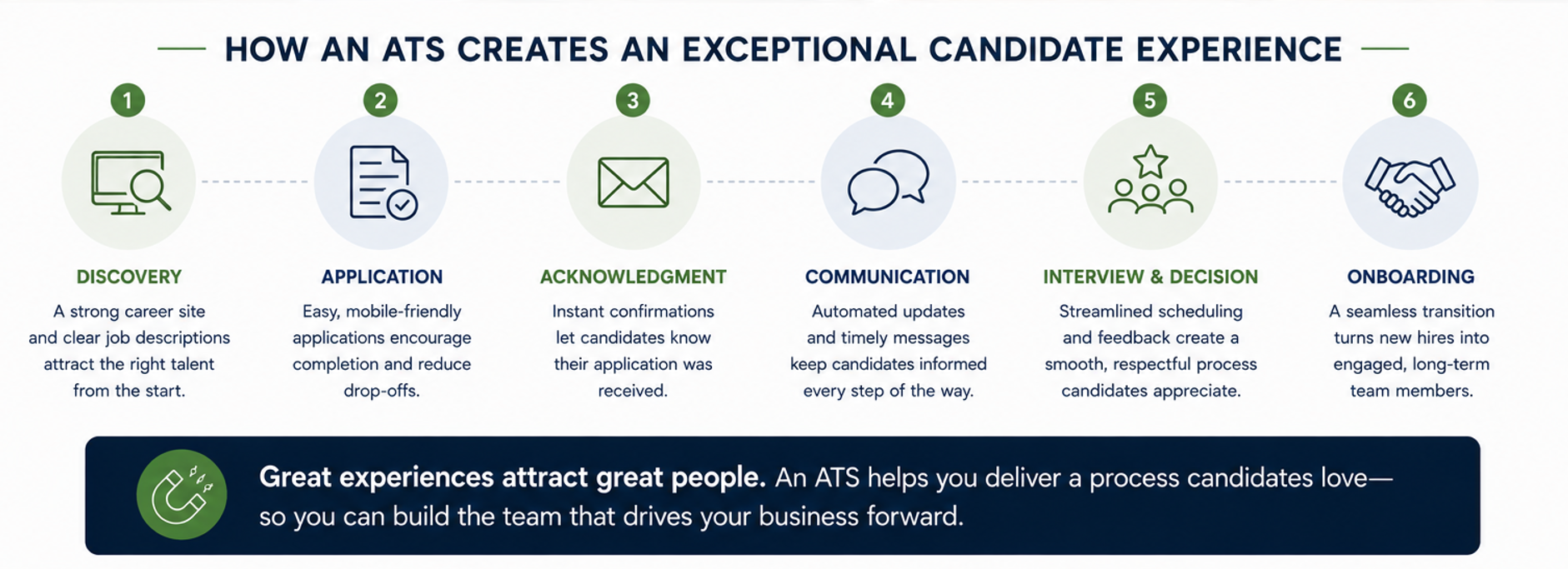
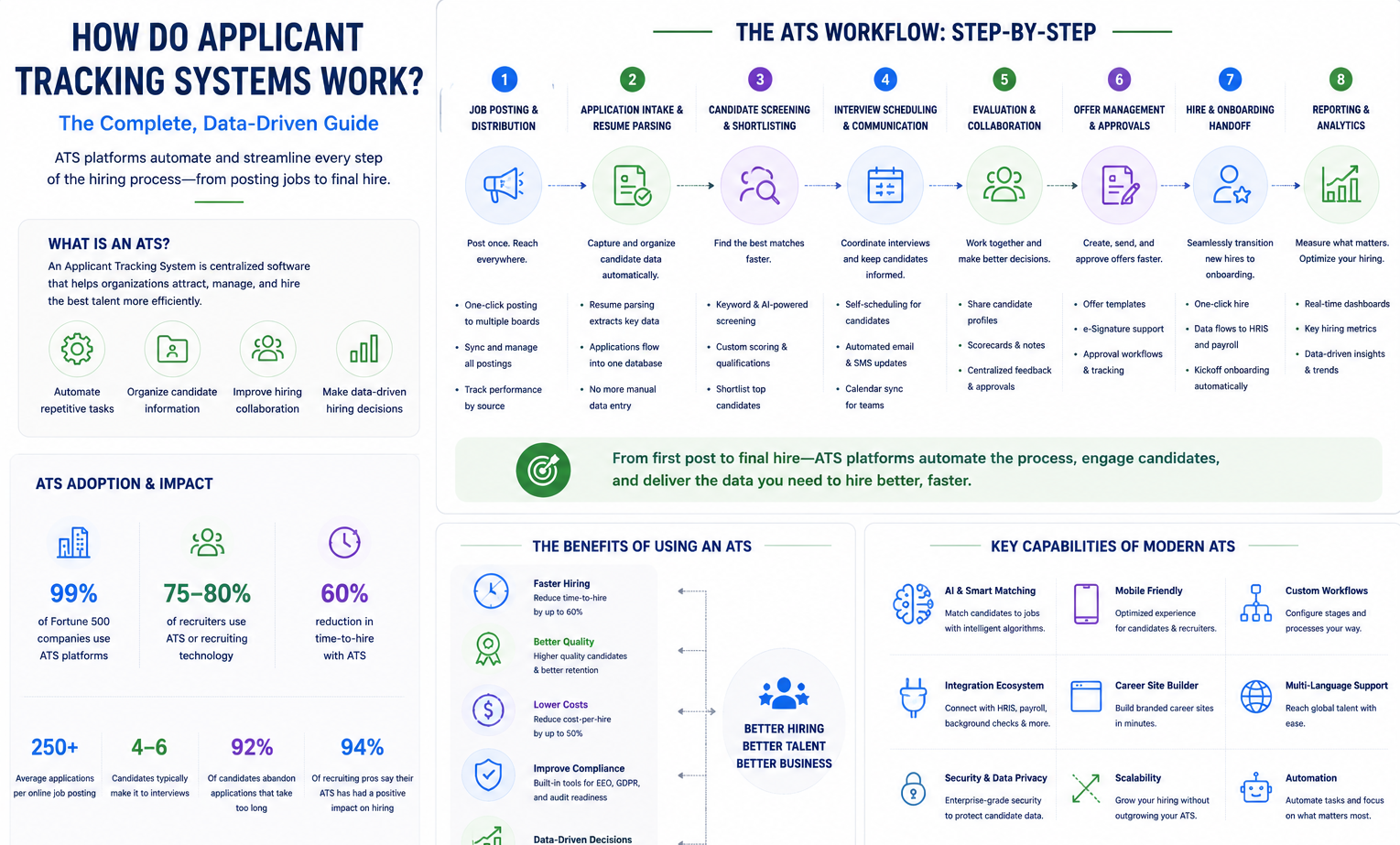
Manual job posting across multiple boards wastes hours weekly and introduces errors that hurt your employer brand. Modern ATS platforms with built-in multi-posting solve these problems.
The pain of manual posting is real: Re-entering job details across 5-10 boards takes 2-3 hours per position. Multiply that by dozens of openings, and recruiters waste entire days on administrative tasks. Worse, manual entry leads to inconsistencies: different job descriptions across platforms confuse candidates and damage your brand.
Integrated ATS platforms deliver massive efficiency gains. Modern systems connect to 50-70+ job boards through Application Programming Interface (API) integrations, enabling true one-click posting. You create the job once, and the ATS automatically handles the formatting requirements for each board.
Key benefits of ATS integration include centralized applicant tracking (all applications flow into one pipeline regardless of source), automated source tracking for ROI analysis, and consistent employer branding across all platforms. Many ATS providers negotiate flat-fee arrangements with job boards, saving significantly compared to individual board pricing.
Here’s how it works with a platform like Ninja Gig: Create your job posting once using built-in templates optimized for ATS parsing. Select target boards from a checklist: mix general sites (Indeed, LinkedIn) with niche boards (Dice, AngelList) based on the role. Click “Post” and the system distributes instantly, handling each board’s specific requirements.
Within minutes, your job appears across dozens of platforms. Applications flow back into a unified dashboard where you can filter, rate, and advance candidates regardless of their source. Real-time analytics show which boards deliver volume versus quality, enabling data-driven optimization.
Case Study Snapshot: Faster Hiring with Multi-Board Strategy
A 250-employee Software as a Service (SaaS) company struggled with technical hiring, relying exclusively on LinkedIn Jobs. Despite LinkedIn’s professional network, they averaged 45 days to fill developer roles with limited applicant diversity.
The multi-board solution transformed their results. Using Ninja Gig’s ATS, they expanded posting to Indeed (volume), Dice (tech-focused), and AngelList (startup-minded developers). The one-click multi-posting took 5 minutes, compared to 2 hours of manual posting.
Results after 90 days: Application volume increased 3x, with Indeed delivering quantity while Dice and AngelList provided quality. Time-to-hire dropped from 45 to 27 days, a 40% improvement. Cost per hire decreased 25% as the flat-fee ATS model replaced individual board fees.
The key insight? Different boards attracted different candidate profiles. Indeed brought junior developers, Dice delivered senior architects, and AngelList attracted full-stack engineers interested in equity. This diversity of sources created a richer talent pipeline and better hiring outcomes.
Final Checklist & Actionable Takeaways

Transform your hiring strategy with these proven practices:
✓ Post to multiple boards strategically: Use 3+ general boards plus 2+ niche boards per role. This balance ensures a broad reach while targeting specialized talent.
✓ Leverage ATS multi-posting: Stop wasting hours on manual posting. Modern ATS platforms distribute jobs in minutes, not hours.
✓ Track performance religiously: Monitor cost-per-application, quality ratios, and time-to-hire monthly. Let data guide your budget allocation.
✓ Refresh listings regularly: Update job posts every 14 days to maintain visibility in board algorithms. Even small tweaks can boost performance.
✓ Optimize continuously: Test different job titles, adjust requirements, and experiment with new boards quarterly. What works today might not work next quarter.
Start Posting Smarter Today
Ready to revolutionize your hiring process? Get started with NinjaGig and publish your next job to 14 job boards in under two minutes. Join thousands of companies already hiring smarter, not harder.
Sign up today and get started! Still have some questions? Book a demo.
Related guides
- Job Board Syndication: What It Is, How It Works & Why It Matters
- How to Post Jobs to Indeed and Turn On Indeed Apply in NinjaGig
- Best Customizable Job Board Software: Buyer’s Guide & Comparison
Want your openings everywhere candidates look? Post to every major job board at once with NinjaGig — one job entry, distributed automatically, with all applicants managed in one place.